Protecting the environment and increasing resilience with a circular economy
The circular economy is a key element of Schaeffler’s sustainability strategy and one of the five action fields of this strategy. Find out why it is so important and what Schaeffler is currently doing to implement it.
The circular economy reduces the impact on the environment and facilitates the development of new business segments. It also promotes the efficient use of resources and contributes to decarbonization. By consistently reusing, repairing, and recycling materials, Schaeffler helps conserve raw materials and minimize waste. By 2030, the company aims to reduce the proportion of non-recyclable waste to 40.000 t, cut water consumption by 750,000 m³, and increase the share of secondary materials to 35 percent.
Four overarching principles of the circular economy
The circular economy at Schaeffler is based on four overarching principles:
- Less material
- Design with foresight
- Longer use
- Less waste
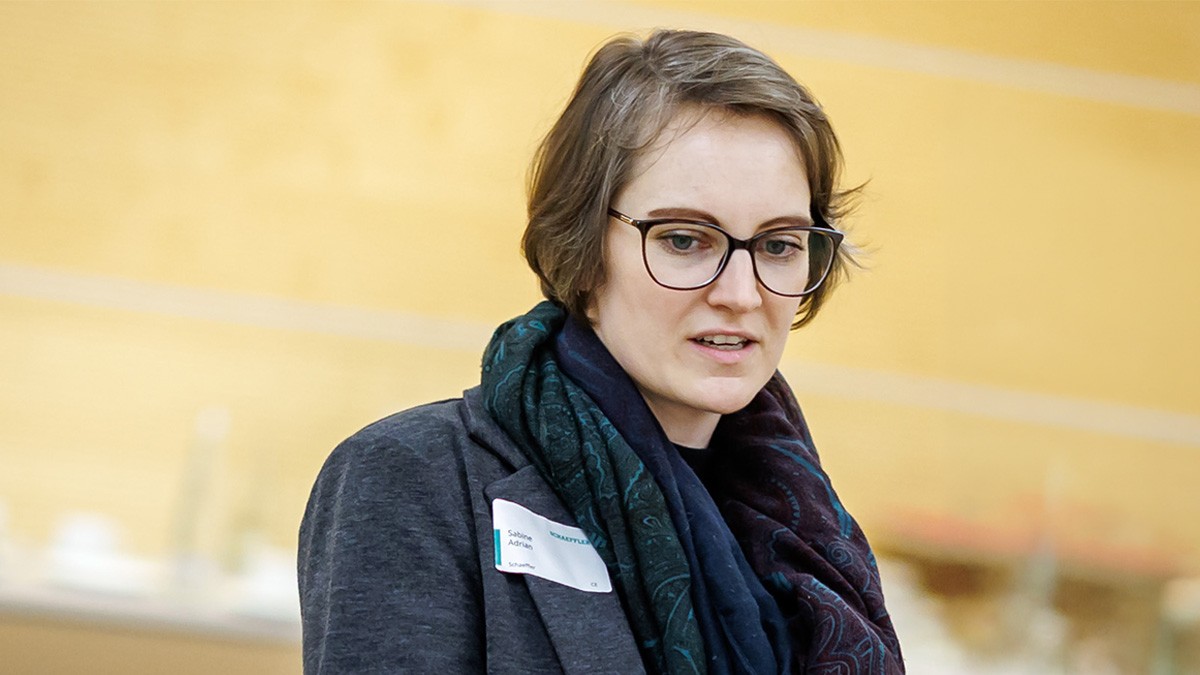
"The idea behind our strategy is that we want to keep our products in use at the highest levels of quality and value for as long as possible and only reuse the materials at the very end. Reuse of materials can make us more independent of tight supply chains,” says Sabine Adrian, Strategic Sustainability Professional at Schaeffler.
How Schaeffler implements the principles of the circular economy
In our podcast, we talk to Sabine Adrian, Strategic Sustainability Professional at Schaeffler, about how Schaeffler is concretely implementing the principles of the circular economy. In the podcast, she provides some background information about Schaeffler’s circular economy strategy, offers insights into the current status, and gives a few examples of concrete measures, ranging from the use of secondary materials and forward-looking product design to innovative recycling and remanufacturing projects.
-
- / -
Circular economy examples: numerous projects at Schaeffler
There are currently numerous examples of this at Schaeffler. Sabine Adrian talks about a few of them in the podcast. One example is the Reassert project. In this project, a consortium led by Schaeffler develops strategies and processes for repairing, refurbishing, or reusing electric motors.
Spray forming is another example. With this special manufacturing process, metal scrap is directly reused. Here, molten metal is sprayed in the form of fine, liquid droplets onto a carrier material and cools down, enabling the production of components or semi-finished products. Thus, the material loop is closed right directly in production.
Special technical challenges
The recycling of complex materials can pose a special technical challenge, for example, if engineering plastics are used, especially in the field of mobility. “Depending on the application, these materials may have to withstand very high temperature fluctuations,” explains Sabine Adrian. “However, this property can be lost if the share of secondary materials is increased.”
More information on the circular economy can be found in the latest Sustainability Report, which can be found on pages 40–120 of the Schaeffler Group Annual Report 2025.
August 2026